
Salute to Robert Altman
 Robert Altman, we salute you.
It was sad yesterday to hear about the death of the great director; although he was 81, he never seemed that old to me. I'm no conoisseur of Altman's pictures, but I've seen enough that I know he was a master, adept at subverting the conventions of cinema to furnish stories full of drama and fleshy characters.
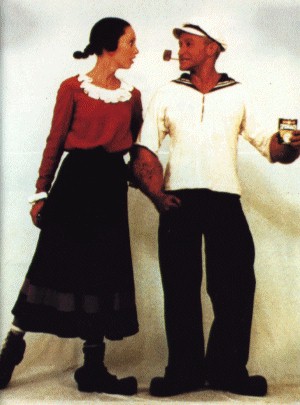 My first encounter with Altman was at the age of about four, when this young Popeye fan was allowed to rent Popeye (1980) as a treat. I remember the lump in my throat when Swee'Pea was kidnapped, and I got the same feeling on subsequent viewings as an adult. This was just one of many occasions on which Altman played with genres: Here he toyed with the movie musical; in M*A*S*H he subverted the war film; in McCabe and Mrs Miller it was the western; and in the brilliant Gosford Park he took on the English murder mystery.
 Of all those, Gosford Park is my favourite. I loved Altman's roving camera, that never stopped weaving in and out of the characters. The central murder mystery never seemed to matter so much as the intrigue surrounding the characters and their hidden depths.
RIP Robert Altman, 1925-2006
posted by David L Rattigan @ 11:09 PM
1 comments


